Insects
Cockroaches in a Restaurant: Risks and Best Practices
Legal obligations, health risks, and prevention best practices for food business owners in French-speaking Switzerland.
Why Cockroaches Are a Critical Issue for Food Businesses
A cockroach infestation in any food service environment — restaurant, café, hotel kitchen, bakery, school canteen, or food production facility — is not just a pest problem. It is a public health emergency with potentially severe legal, financial, and reputational consequences. In Switzerland, food hygiene legislation holds food business operators directly responsible for pest control in their establishments.
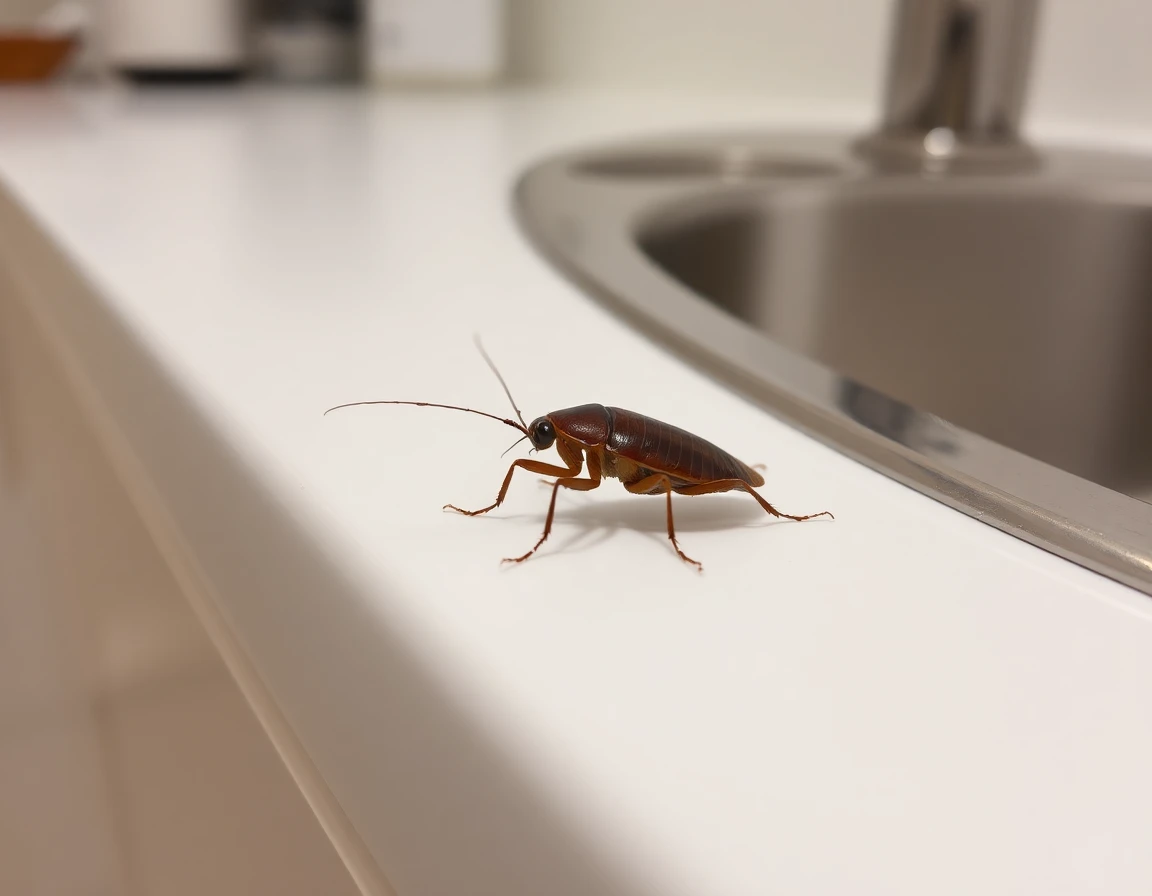
Cockroaches are among the most robust and prolific insects. A single female German cockroach (Blattella germanica) — the species most commonly found in commercial kitchens — can produce up to 300 offspring per year. An infestation that starts with a handful of insects can grow to thousands within a few months. They are active at night, moving between food storage, preparation, and waste areas, spreading pathogens on every surface they cross.
Health Risks: What Cockroaches Carry
Cockroaches are known vectors and mechanical carriers of a wide range of pathogens. They pick up bacteria, viruses, and parasites from sewers, drains, and decaying matter, and deposit them on food contact surfaces, utensils, and open food. Documented risks include:
- Salmonella: One of the most frequent causes of food poisoning, frequently linked to cockroach contamination in commercial kitchens.
- E. coli: Faecal bacteria deposited on food contact surfaces can cause severe gastrointestinal illness.
- Listeria monocytogenes: Particularly dangerous for pregnant women, elderly people, and immunocompromised individuals.
- Hepatitis A and E: Cockroaches can mechanically transfer virus particles from contaminated material to food.
- Allergens: Cockroach skin sheds, saliva, and droppings are a recognised cause of asthma and allergic reactions in workers.
Legal Obligations in Switzerland
Under the Swiss Federal Food Act (LDAl / LeDA) and the associated ordinances based on EU food hygiene regulation (EC) 852/2004, food business operators are legally required to implement and maintain effective pest control measures as part of their food safety management system.
Cantonal food safety inspectors (inspecteurs des denrées alimentaires) conduct unannounced inspections and can issue formal notices, fines, or closure orders if pest activity is found. The consequences of a failed inspection include:
Immediate Closure
Cantons can order immediate closure of an establishment where pest activity poses an imminent food safety risk.
Financial Penalties
Fines and prosecution under the Swiss Criminal Code for knowingly operating a food business with an uncontrolled pest infestation.
Reputational Damage
Inspection results can be disclosed publicly or appear in review platforms, with lasting damage to customer trust.
Early Warning Signs in a Commercial Kitchen
Staff should be trained to recognise these early indicators and report them immediately to management:
- Small, dark droppings (resembling ground pepper) in corners, under equipment, or behind pipes
- A musty, oily odour — particularly in enclosed areas such as under sinks or behind fridges
- Egg cases (oothecae): small, brown, purse-like capsules found in dark, sheltered spots
- Smear marks along walls, behind appliances, and around pipe penetrations
- Sighting of live insects, particularly if observed during daylight hours (which suggests a significant infestation, as cockroaches are nocturnal)
- Gnaw marks on packaging or food products
Best Practices for Prevention
Structural Hygiene
- Seal all pipe penetrations, cracks, and gaps in walls, floors, and ceilings
- Install door sweeps on external doors and service entrances
- Ensure all drains are equipped with functioning covers
- Maintain positive air pressure where possible to deter entry
Food and Waste Management
- Store all food products in sealed, rigid containers — never leave food exposed overnight
- Empty all bins at the end of service and use lidded, foot-operated bins
- Clean grease traps and floor drains regularly — these are prime cockroach harbouring sites
- Inspect all incoming deliveries for signs of pest activity before accepting them
Cleaning Protocols
- Deep-clean behind and underneath all fixed equipment on a regular schedule
- Degrease extractor hoods, filters, and ducting — grease residues attract cockroaches
- Clean and sanitise all food contact surfaces at the end of each service
- Remove standing water and repair leaking pipes promptly
Professional Treatment for Food Businesses
Consumer-grade insecticide products are not effective against established cockroach infestations and may actually worsen the situation by causing the colony to scatter and disperse into previously unaffected areas. Professional treatment is essential and typically involves gel baiting, residual insecticide application, insect growth regulators, and monitoring traps.
We understand the operational constraints of food businesses and can schedule treatments to minimise disruption — including out-of-hours interventions. We provide full documentation of treatments for your food safety records, satisfying the requirements of cantonal inspectors.
Need a pest control expert?
Contact us for a free, no-obligation quote. We respond quickly throughout French-speaking Switzerland.
Get a Free Quote